Representación de la FAO en Chile, Oficina Regional de la FAO para América Latina y el Caribe, Ministerio de Vivienda y Urbanismo (MINVU), Ministerio de Medio Ambiente (MMA), Ministerio de Agricultura (MINAGRI)
+506 2216 0222
opsaa@iica.int


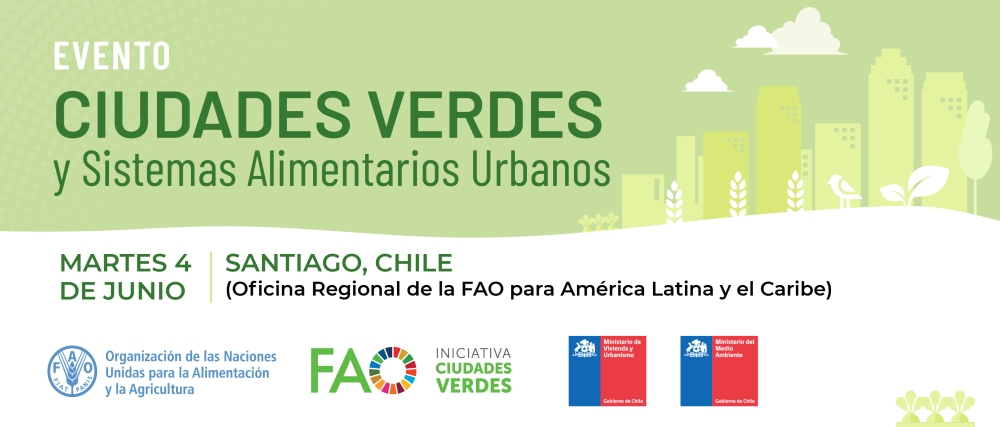
Event detail:
Cities, which occupy only 3% of the earth, consume up to 80% of energy and generate 75% of carbon emissions. In Chile, 88.6% of the population lives in urban areas, facing challenges such as social segregation and limited access to healthy food, exacerbated by the COVID-19 pandemic. Unplanned urbanization has affected natural resources and ecosystems, especially in peri-urban and rural areas, on which cities depend for water, food and energy. FAO responds with the Urban Food Agenda and the Green Cities initiative, promoting integrated and sustainable food systems. In Chile, it supports projects such as the National Green Infrastructure Strategy and strengthens institutional capacities through the Intermediary Cities and Agrifood Systems Network (Red CISA). It also promotes the management of free fairs and projects such as the Solidarity Ecomarkets to improve access to food. A recent diagnosis guides FAO's future actions in sustainability and food security in the country.
Organized by
Modality
Country
Thematic Area
Join to conversation
If you want to join and participate, press "I want to collaborate"; if you dont yet have an account, press "Register".